

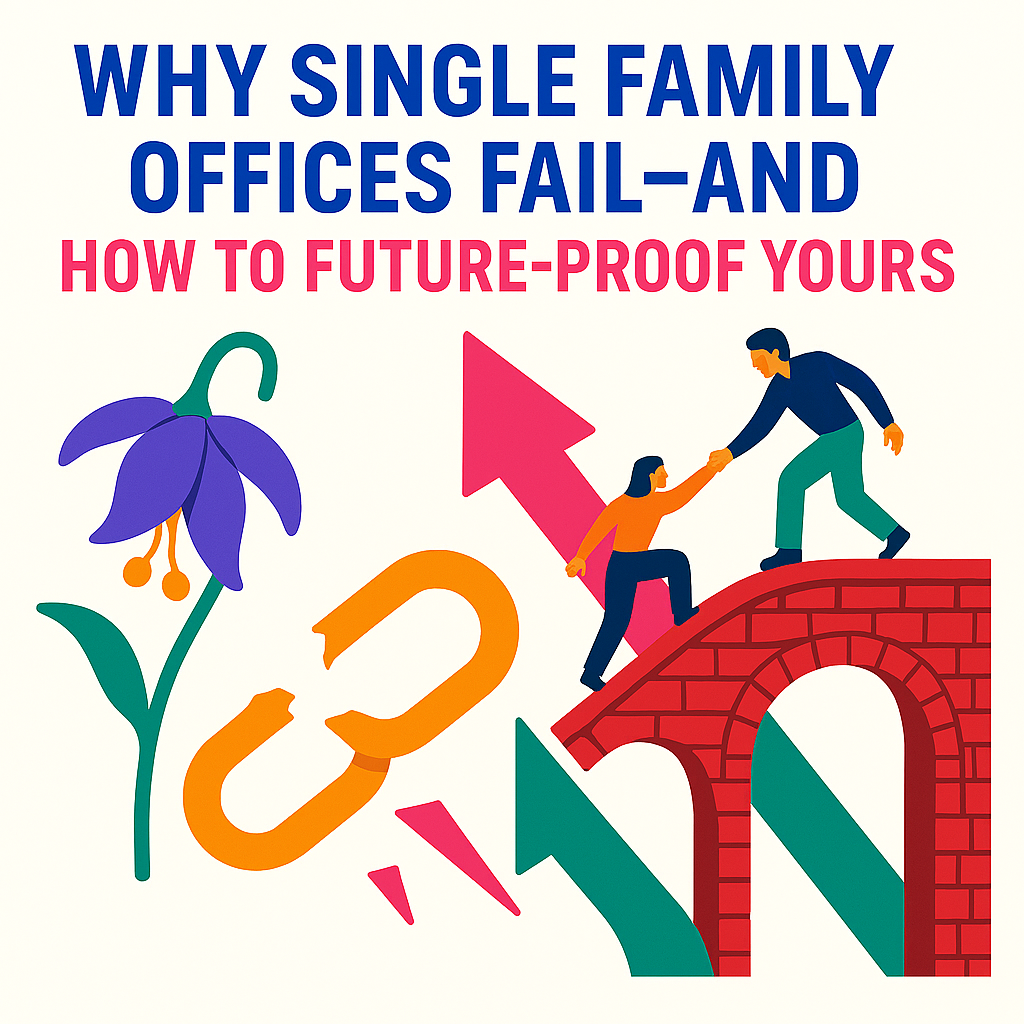
Single-family offices are often established to preserve wealth, values, and legacy across generations. Yet despite their noble intent, many SFOs falter—some quietly dissolve, others implode under the weight of complexity, misalignment, or generational disconnect. Understanding why they fail is the first step toward building a resilient, future-ready family office.
Common Reasons for Failure
1. Lack of Purpose Beyond Wealth
Many SFOs are structured around asset management alone, neglecting the deeper “why” that binds generations. Without a shared mission—whether it be philanthropy, entrepreneurship, or cultural legacy—family members tend to disengage.
Case Study: The Weston Family Office (Canada)
After decades of success in the retail empire, internal tensions arose over differing visions for the family’s legacy. A lack of unified purpose led to fragmentation and restructuring, with some members opting out entirely.
2. Poor Governance and Decision-Making Structures
When roles, responsibilities, and decision rights are unclear, confusion and conflict follow. Informal governance may work for a founder, but it rarely scales across generations.
Case Study: The Gucci Family
The lack of formal governance led to bitter disputes and legal battles. Eventually, the family lost control of the brand, which was sold to outside investors—an iconic example of legacy erosion.
3. Failure to Engage the Next Generation
Younger family members often feel alienated by rigid structures or outdated values. Without intentional onboarding, education, and empowerment, they may reject the family office altogether.
Case Study: A European Industrial Family
The third generation, passionate about sustainability and impact investing, clashed with the office’s traditional wealth preservation model. A failure to adapt led to the creation of separate entities and loss of cohesion.
4. Over-Reliance on Key Individuals
Many SFOs are built around a charismatic founder or trusted advisor. When that person steps away—due to retirement, death, or scandal—the office may unravel.
Case Study: The Bass Family (U.S.)
After the patriarch’s passing, the family office struggled to maintain unity. Differing investment philosophies and interpersonal dynamics led to splintering into multiple offices.
5. Inadequate Risk Management and Succession Planning
Without robust systems for continuity, compliance, and crisis response, SFOs are vulnerable to market shocks, legal challenges, and internal disputes.
How to Future-Proof a Family Office
• Define a Shared Vision: Go beyond wealth. Articulate values, purpose, and impact goals that resonate across generations.
• Build Adaptive Governance: Create clear structures with room for evolution. Include family councils, charters, and independent advisors.
• Empower the Next Gen: Offer mentorship, education, and co-leadership opportunities. Let them shape the office’s future.
• Institutionalise Knowledge: Document processes, relationships, and legacy stories. Don’t let wisdom vanish with individuals.
• Integrate Emotional Intelligence: Use storytelling, symbolism (like the Iris flower), and inclusive dialogue to foster trust and belonging.
Final Thought
A family office is more than a financial entity—it’s a living system of values, relationships, and aspirations. When designed with intention and adaptability, it becomes a vessel for an enduring legacy. When neglected, it risks becoming a relic of the past.


Leave A Comment