

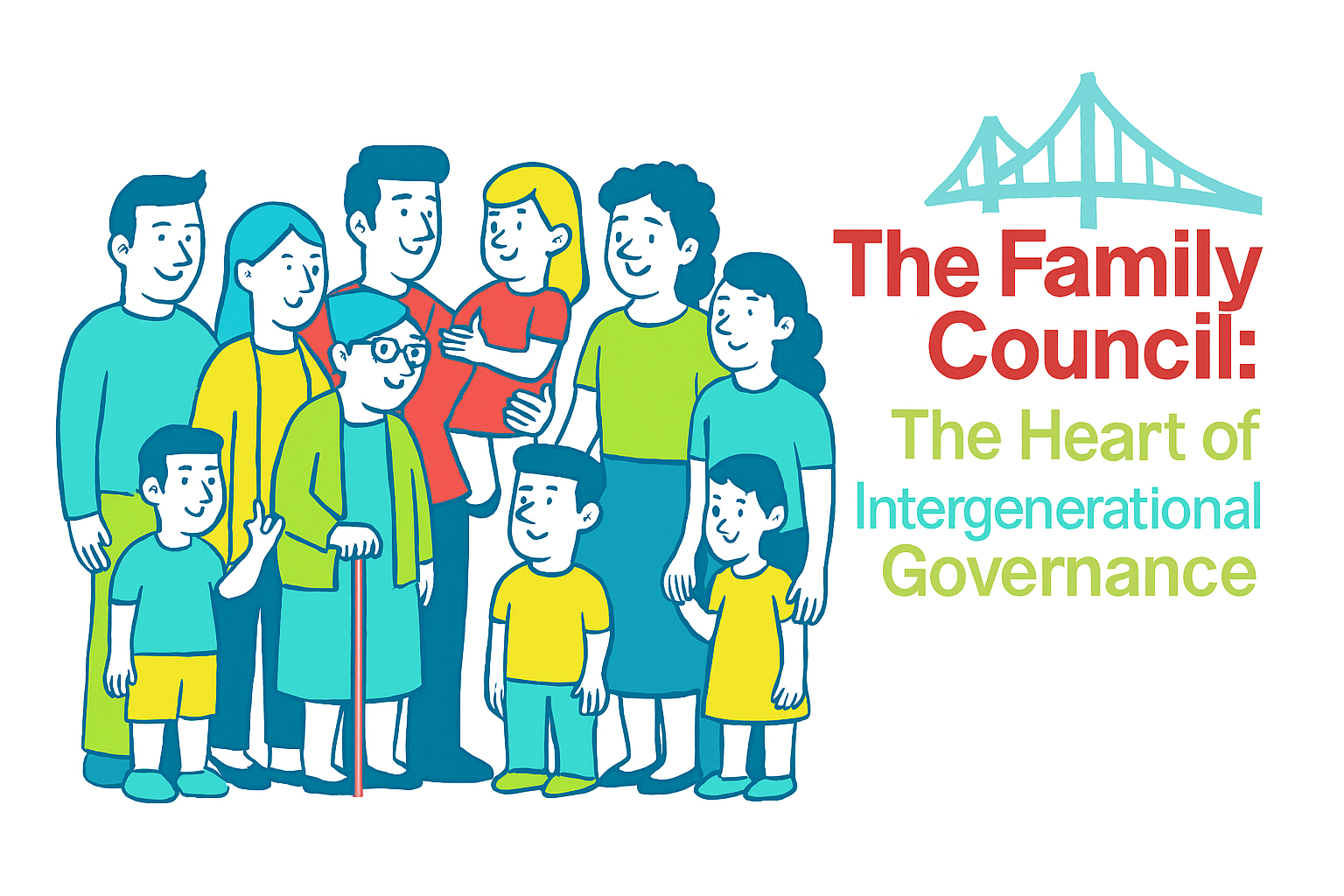
For families navigating the complexities of intergenerational wealth, the question often arises: How do we move from a single decision-maker to a structured, collaborative system that includes multiple voices? The transition from a patriarch or matriarch leading the charge to a more democratic model is one of the most delicate and critical phases in preserving a legacy.
The answer lies in the deliberate establishment of a Family Council. This body is not a corporate board of directors imposed upon a family; rather, it is the family’s own chosen governance organ, designed to give structure to their collective voice and ensure their shared wealth serves their shared values.
Why a Family Council is Essential
Without a formal structure, decision-making in a wealthy family can default to the loudest voice, the most emotional plea, or the silent, unspoken pressure of tradition. This often leads to conflict, resentment, and a fractured family identity.
A Family Council mitigates this by providing:
• A Forum for Dialogue: A dedicated time and place for open, respectful communication about family matters separate from business or investment discussions.
• Clarity in Roles: It clearly defines who is responsible for what decisions, moving away from ambiguity and toward accountability.
• Representation: It ensures all branches and generations of the family feel heard and represented in the stewardship of their legacy.
• Continuity: It creates a sustainable system that can outlast its founding generation, ensuring the family’s values and vision endure.
The Evolutionary Path: Types of Family Councils
A family’s governance structure is not one-size-fits-all. It should evolve to match the family’s size, complexity, and stage of development. The establishment of councils often follows a natural progression.
Stage 1: The Founding Council (The Informal Circle)
• Composition: Typically consists of the wealth-creating generation(s) and their immediate advisors (e.g., lawyers, accountants, trusted family office executives). Spouses and adult children may be invited as observers or partial participants.
• Focus: This initial council is often informal, functioning as a steering committee. Its primary role is to initiate the governance process. It discusses the need for structure, drafts the first version of a family mission statement, and plans for the inclusion of the next generation.
• Key Output: The decision to formalise governance and create a more representative council.
Stage 2: The Representative Family Council (The Formal Governing Body)
This is the most common meaning of “Family Council.” It is the central governing body for the family as a whole.
• Composition: Members are elected or appointed to represent different branches of the family. Terms are often staggered (e.g., 2-4 years) to ensure continuity and fresh perspectives. Size is kept manageable, typically ranging from 5 to 9 members.
• Focus: This council operates based on a ratified Family Constitution. Its responsibilities are broad:
o Upholding the family’s shared vision and values.
o Making strategic decisions about shared assets (e.g., use of a family vacation home, philanthropic direction).
o Overseeing the education and engagement of the next generation.
o Serving as the primary liaison between the family and the entities that manage their wealth (e.g., the Trust’s Protector, the Family Office CEO, the Board of the family business).
o Managing family dynamics and conflict resolution.
• Key Output: Strategic policies, ratified meeting minutes, and recommendations to other family entities.
Stage 3: The Specialised Council (The Committee Structure)
As a family grows and its assets become more complex, a single Representative Council can become overwhelmed. This is when sub-committees or specialised councils are formed.
• Composition: These are smaller groups focused on a specific area, often populated by family members with relevant passion or expertise, alongside external experts.
• Common Types of Specialised Councils/Committees:
o Education Committee: Develops and runs programs for financial literacy, leadership, and values education for all generations.
o Philanthropy Committee: Researches causes, vets charities, and recommends grants in alignment with the family’s mission.
o Investment Committee: Works with the Family Office or CIO to understand investment strategy, risk tolerance, and performance. (Note: This is advisory; final investment decisions typically remain with the professional trustees or investment board.)
o Audit & Risk Committee: Oversees compliance, cybersecurity, and other risk management factors affecting the family.
These specialised councils undertake the detailed work and present well-researched recommendations to the central Representative Council for approval, thereby making the entire governance system more efficient and expert-driven.
Best Practices for Establishing a Successful Council
1. Define the Mandate First: Before selecting members, draft a clear ** Charter** or Terms of Reference. This document should outline the council’s purpose, responsibilities, decision-making authority, meeting frequency, and operational rules.
2. Prioritize Process Over Personalities: The selection process for members should be transparent and fair. Consider elections, rotations, or a nominations committee to avoid perceptions of favouritism.
3. Invest in Facilitation: Especially in the early years, engage a professional facilitator to run meetings. This ensures neutrality, keeps discussions on track, and helps manage the complex dynamics that inevitably arise.
4. Embrace Training: Council members are family members first, not professional directors. Offer training on fiduciary duties, meeting etiquette, financial literacy, and conflict resolution to empower them in their roles.
5. Communicate Relentlessly: The Council must report back to the broader family. Regular newsletters, summaries of meeting outcomes, and annual family meetings are essential to maintain transparency and trust, thereby preventing the council from being perceived as a secretive “inner circle.”
The Ultimate Role: Guardian of the Legacy
The establishment of a Family Council, in its various forms, is the tangible expression of a family’s commitment to its future. It transforms a collection of individuals into a purposeful enterprise. It is the guardian of the family’s most valuable assets: its values, its unity, and its legacy. By investing in this structure, families ensure their wealth remains a tool for opportunity and positive impact, rather than a source of discord, for generations to come.


Leave A Comment