

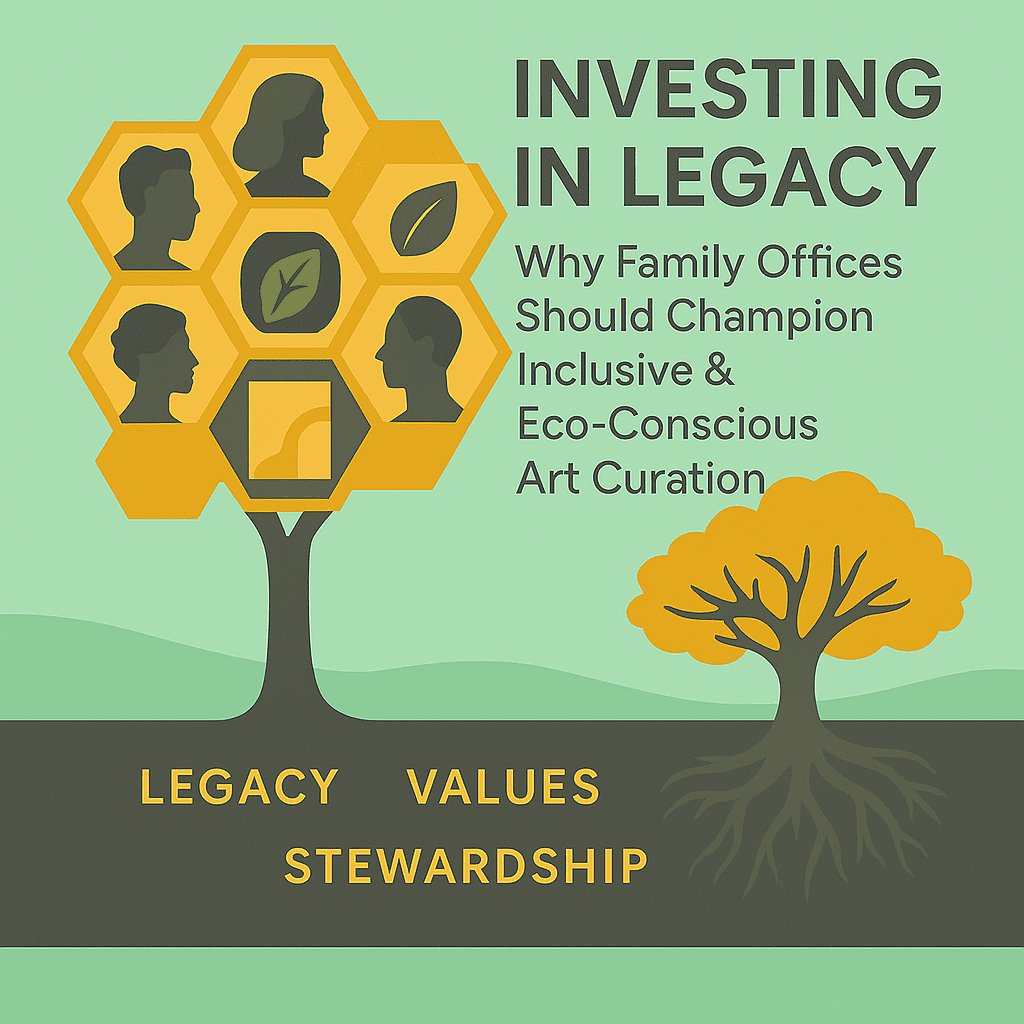
Family offices are uniquely positioned to shape the values that are carried forward by future generations. As guardians of intergenerational wealth, their influence extends far beyond asset management—it reaches into the heart of culture, ethics, and legacy. In recent years, sustainability and inclusivity have risen to the top of the agenda in everything from investment strategy to philanthropy. It’s time the same principles guide how families collect and exhibit art.
An eco-conscious, inclusive approach to art curation does more than express taste—it becomes a visual representation of family values. It tells a story. And in the context of intergenerational wealth, stories matter.
Why Sustainability and Inclusivity Matter in Art
Sustainability in the art world isn’t just about materials or energy-efficient lighting. It’s about ethical acquisition, long-term preservation, and conscious curation practices that minimise environmental harm. But it’s also about sustaining human cultures—especially those that have been historically marginalised.
In both South Africa and Australia, Indigenous artists have been custodians of rich traditions, philosophies, and cosmologies for millennia. Yet their presence in mainstream exhibitions and major collections is still limited. This exclusion isn’t just a missed artistic opportunity—it’s a legacy risk. If the stories of First Nations artists are left out of our collections, so too are the values of resilience, spiritual continuity, and harmony with nature.
The Family Office Role: More Than Patrons
Family offices can lead the charge in shaping more ethical and inclusive art ecosystems by:
Requiring sustainable practices from galleries and art fairs they support.
Prioritising Indigenous and underrepresented artists in collections, commissions, and philanthropic grants.
Funding ego-conscious exhibitions that shift the spotlight from the artist-as-brand to the artwork-as-bridge—between generations, cultures, and environments.
Supporting underrepresented artists, especially Indigenous creators, reflects an investment in truth-telling, reconciliation, and cultural preservation. In South Africa, this may involve acquiring works by artists whose narratives speak to post-Apartheid identity, land rights, or ancestral wisdom. In Australia, it could mean championing Yolŋu artists from Arnhem Land or desert painters from Papunya whose works are encyclopedias of lore encoded in ochre and canvas.
From Ownership to Stewardship
We’re seeing a global shift from collecting art as an assertion of status to viewing it as a form of stewardship. This evolution mirrors the broader shift within family offices—from simply preserving wealth to cultivating purpose.
As a CFP® and financial communicator, I’ve seen how numbers only tell part of a family’s story. The other part lives in values, in the way families give, and increasingly, in the art they choose to surround themselves with. My future focus is to help tell these stories—of the founders and their beneficiaries—so that wealth is passed on not just with a ledger, but with a legacy.
Building a Living Legacy
Imagine a family office collection that features an eco-conscious exhibition curated by both the younger and elder generations of a family. Imagine a story wall where each artwork is accompanied not just by a description but by a video of the artist sharing their intent—and a family member reflecting on why the piece matters to their lineage.
This is not only possible—it’s happening. Across Cape Town and the Northern Territory, from the Zeitz MOCAA to the National Gallery of Victoria, conversations around representation, land, and legacy are gaining traction. Family offices have the capital—and the conscience—to make sure these conversations don’t fade.
Closing Thought
In a world where wealth is often seen as silent and opaque, art can speak. And when that art is sustainably acquired and inclusively curated, it can speak volumes about who a family is—and who they hope their descendants will become.
By embedding inclusivity and sustainability into art stewardship, family offices can transform their collections from symbols of success into compasses of conscience. And for those of us preparing to tell these families’ stories, that’s a narrative worth passing on.


Leave A Comment